
Anyone who has worked a Saturday double knows the floor of a restaurant is never really dry. Ice escapes the well, a busser clips a water pitcher, the dish pit sprays, the fryer station breathes a film of oil onto the tile, and the front door lets in half the weather on Northern Boulevard. Most nights nobody goes down. When somebody does, a restaurant slip and fall claim in New York turns on a handful of questions: what was on the floor, who put it there, and how long it sat before the staff should have caught it. This guide walks the room the way a manager does on a pre-shift walkthrough, zone by zone, and explains what the law from Jamaica to Mineola generally expects at each stop.
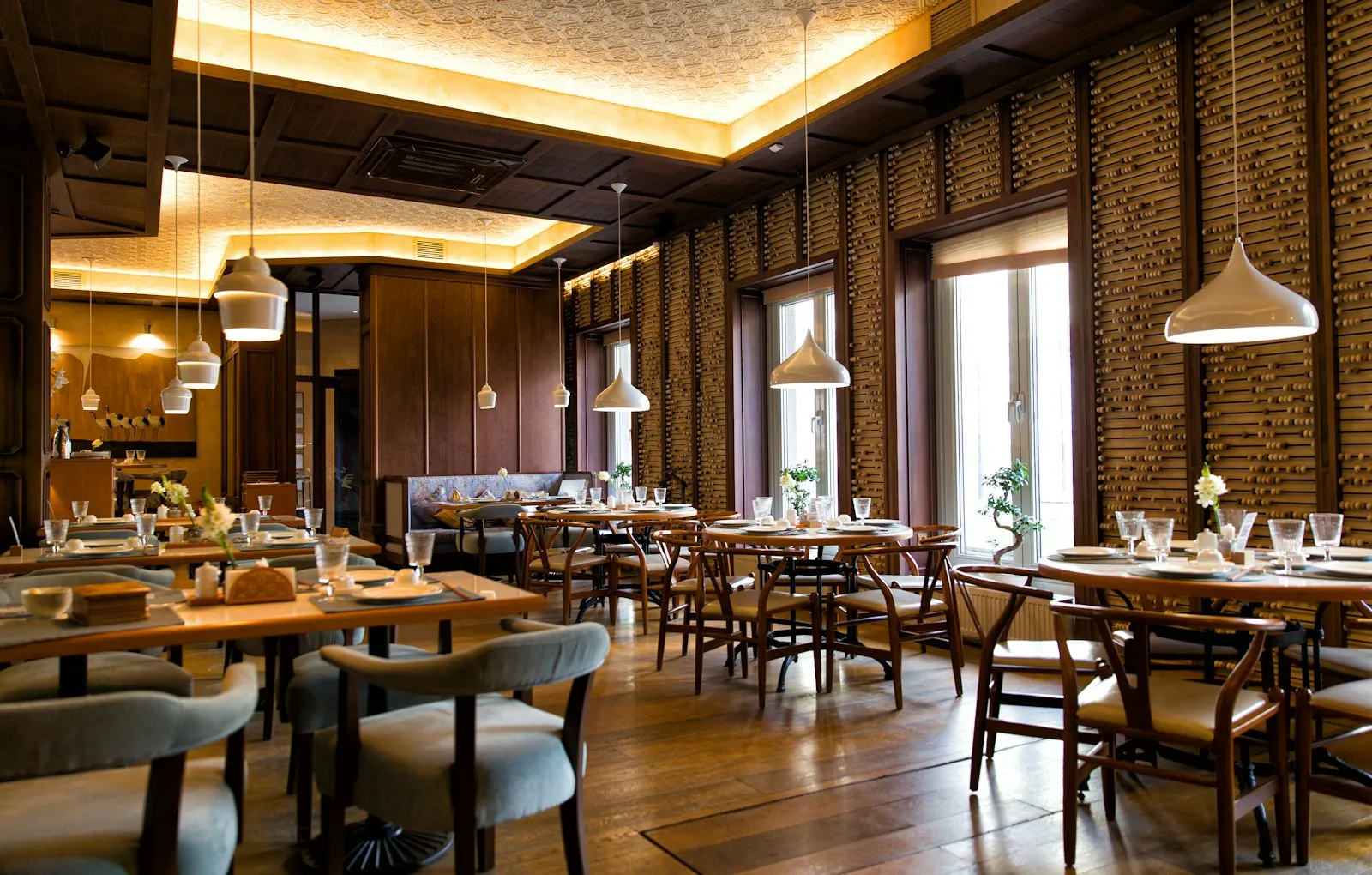
Who Answers for the Floor: Owner, Operator, Landlord
A restaurant, diner, bar or food-court stall owes the people it lets inside reasonable care to keep the premises in a reasonably safe condition. That duty usually lands on the business that runs the space day to day, because the operator controls the mop schedule, hires the bussers and decides whether a wet-floor sign comes out of the closet. If the building owner is a separate company that leased the space and walked away, it is often called an “out-of-possession landlord,” and its exposure is generally limited. It may still answer if it kept a right to re-enter and repair, or a statute assigned it the duty.
In a food court, the stall may control the counter while the mall’s crew controls the seating floor. Our premises liability practice handles exactly this kind of who-controlled-what question.
Takeaway: the defendant is whoever controlled the spot where you fell, and sometimes that is more than one company.
What You Have to Prove: Created It, Knew About It, or Should Have
A fall alone does not make the restaurant responsible. New York generally asks the injured guest to show one of three things:
- The restaurant created the hazard. A server who mopped the aisle during lunch rush with no cone, a line cook who dragged a leaking grease bucket through the dining room, a bartender who dumped a bin of ice behind the rail where guests stand.
- The restaurant had actual notice. Somebody told a host twenty minutes earlier that the restroom sink was overflowing, and nothing happened.
- The restaurant had constructive notice. Nobody reported it, but the condition was visible and apparent and had existed long enough that staff doing their jobs should have discovered and fixed it.
That third option comes from Gordon v. American Museum of Natural History, the Court of Appeals case lawyers still quote on this point. The defense will say the spill “just happened,” so cart tracks through a puddle or a dried ring around a soda patch matter.
There is also the idea of a recurring condition. If the kitchen door leaks grease onto the same strip of floor every single service and management knows it, courts have sometimes treated that ongoing problem as notice in itself. Cleaning logs and sweep sheets become valuable evidence here. The firm’s article on notice in Queens fall cases goes deeper into how these rules play out across stores and buildings.
Zone One: The Entrance Vestibule on a Rainy Night
Ask any host where the worst floor in the house is, and they will point at the front door during a storm. Umbrellas drip, boots carry slush, and the first ten feet of tile turn glassy.
New York has a “storm in progress” rule, but it is mostly about outdoor snow and ice: owners of sidewalks and parking areas are usually allowed until the snow or sleet stops, plus a fair window, before they must shovel and salt. Inside the door is a different conversation. A restaurant is usually expected to take reasonable precautions against tracked-in water, such as laying down a runner, putting out a sign, and having someone swing a mop through the vestibule between seatings. Courts have generally said an operator is not required to cover every inch of floor with matting or to keep it perfectly dry while people keep walking in from the rain. What matters is whether the steps taken were reasonable for the conditions.
That is why the mat itself becomes a piece of evidence. A soaked runner that stopped absorbing hours ago, a mat with a curled edge that caught a toe, or one that slid across wet tile because nobody bothered with a rubber-backed version can each show the restaurant fell short. If your foot caught on an edge rather than sliding, your claim may look more like a trip than a slip, and our trip and fall guide covers that variation.
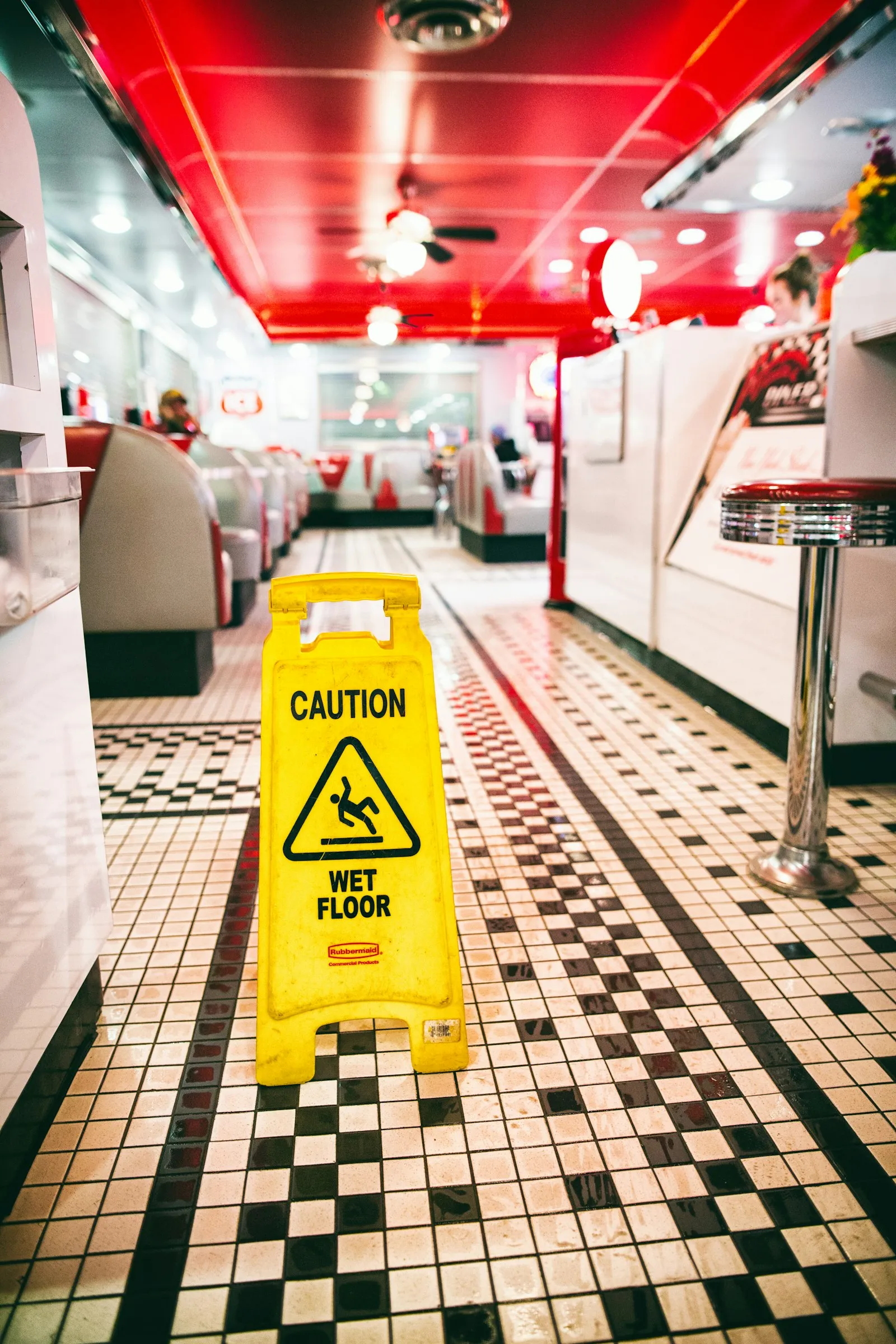
Zone Two: The Bar Rail and the Side Station
Behind the bar, ice is a constant. In front of it, guests stand three deep with sweating glasses, and cubes fall from shakers and overfilled rocks glasses onto the floor. An ice cube melts into a nearly invisible puddle within minutes. A fresh spill is hard to tie to notice, but not when bar staff watch the floor and let it go through a long rush.
The side station, where servers grab water, coffee, napkins and bread, is the dining room’s other wet spot. Pitchers get refilled, tea urns drip, and the floor in front of it takes a beating. A restaurant that knows its side station sheds water every night and never puts a mat or sign there may be dealing with exactly the kind of recurring condition described above.
Takeaway: busy service is not an excuse; it is the reason staff should be watching the floor more closely.
Zone Three: The Walk to the Restroom
The path to the restroom is often the darkest, narrowest stretch of the building. Diners and bars in older Queens and Long Island buildings tend to have a step down near the back hallway, a dim bulb nobody replaced, and tile that floods when a toilet runs or a sink drain backs up. Restroom leaks are a classic notice problem: housekeeping checklists taped to the door often show whether anyone checked that room on schedule, and an unsigned checklist for the last three hours says a lot.
If you fell because you could not see a change in level, note the lighting before anyone flips a switch.
Zone Four: The Buffet Line and the Food Court
Buffets and food courts let guests serve themselves, which means guests spill. Sauce off a ladle, a dropped scoop of rice, a leaking soup tureen, a tray of drinks knocked off a counter. Since a customer made the mess, these cases usually turn on inspection: how often staff walked the line, and whether anyone saw the spill and walked past it.
Similar issues come up when merchandise or product falls in retail settings; the firm’s post on injuries from falling merchandise in stores shows how inspection routines become evidence there too.
Zone Five: The Kitchen Pass, Workers and Delivery Drivers
The back of house is a different legal world depending on who you are.
If you work there. Cooks and dishwashers slip on fryer grease and dish-pit water constantly. An employee hurt on the job is generally covered by workers’ compensation, and under Workers’ Compensation Law § 11 that benefit is usually the exclusive remedy against one’s own employer. A separate lawsuit may still be possible against another company, such as a contractor who installed defective flooring or a landlord responsible for a leaking pipe. See OSHA’s walking-working surfaces page on keeping work floors clean and dry. Our work-related injury page covers comp.
If you are picking up an order. Delivery riders and drivers waiting at the pass are not the restaurant’s employees. If one slips on a greasy floor by the pickup shelf, the restaurant is not shielded by the comp bar the way it is with its own staff, and a negligence claim against it may be available. Riders also face plenty of risk outside, which our article on parking lot crashes covers for curbside pickups and lot traffic.

When an Intoxicated Guest Causes the Fall
Sometimes the hazard is a person, not a puddle. A visibly drunk patron stumbles into you on the stairs, or knocks you off a bar stool. The state’s Dram Shop Act, General Obligations Law § 11-101, may open a claim against the bar or seller that unlawfully poured the alcohol that caused the intoxication, such as continuing to pour for someone who was visibly intoxicated. The firm’s post on dram shop claims explains the statute in the driving context, and the same principles apply inside the bar.
Shoes, Phones and a Glass of Wine: Shared Fault
Expect the restaurant’s insurer to look hard at you. Smooth-soled shoes, a phone in hand or a bottle of wine at the table will all come up. Fault gets split here under the pure comparative system in CPLR § 1411: your own share of blame generally trims what you recover rather than wiping it out. Our comparative negligence explainer walks through how that math works.
Takeaway: a drink with dinner does not end your case, but it will be raised, so be accurate about it from the start.
Evidence to Grab Before You Leave the Table
Within an hour the floor is mopped and the shift has clocked out. If you can, collect:
- Photos of the floor exactly where you went down, including the substance, any tracks through it and the absence of a sign or mat.
- Photos of your shoes, top and soles, to head off the “bad footwear” argument.
- Your receipt or card statement, which proves you were there that day and time.
- Names of staff who helped you or saw the fall, and of any guests willing to share a phone number.
- An incident report; ask the manager to write one and request a copy or at least a photo of it.
- Security footage; ask in writing that it be preserved, and read our guide on getting security camera footage of a fall for how that request generally works.
Then get medical attention and stick with the follow-up visits; gaps in treatment invite the insurer to call the injury minor.
No Serious-Injury Threshold, but a Real Deadline
Car crash victims in New York often have to clear the “serious injury” bar before they can collect for pain and suffering. A restaurant slip and fall is a premises case, and that threshold does not apply. If you hit your mouth on the way down, our article on broken-teeth injury claims covers that kind of damage specifically.
Timing still matters. Most premises injury suits against private businesses generally must be started inside a three-year window set by CPLR § 214. If the fall happened in a city-run facility, such as a cafeteria in a public building, the paperwork clock is far shorter: a notice of claim usually has to go in within 90 days.
How Our Office Handles Restaurant Fall Cases
Yakov Mushiyev & Associates takes on restaurant and bar injury cases out of its Rosedale office at 1 Cross Island Plaza, on the Queens–Nassau line, for diners, bar patrons and delivery workers from anywhere in the city or on Long Island. The firm’s results total more than $80 million recovered for people hurt in New York. Your first sit-down costs nothing, there is no fee without a win, and meetings happen in English, Russian or Spanish at your kitchen table, a hospital bedside or on a video call. Learn more on our slip and fall practice page, or reach the office through our contact page to talk through what happened.
Restaurant Slip and Fall: Frequently Asked Questions
The floor looked dry. Can I still bring a claim?
Possibly. Clear liquids and thin grease can be nearly invisible under dim lighting. Photos taken at floor level, wet clothing and witness descriptions can help show what was there even if it was hard to spot.
Does a wet-floor sign mean the restaurant is off the hook?
Not automatically. A sign is one precaution, and whether it was enough depends on where it stood, whether it was visible, and whether the hazard could have simply been cleaned up instead.
I slipped on rain at the entrance. Is that the restaurant’s fault?
It depends on what the restaurant did about it. Operators are generally not expected to keep an entryway bone-dry during a storm or cover every inch with matting, but they are expected to take reasonable steps. A soaked, curled or missing mat, no sign and no one mopping during a long downpour can point toward negligence in a restaurant slip and fall case.
I was hurt working in the kitchen. Can I sue my employer?
Usually not directly. In New York, comp benefits typically take the place of a negligence suit against the company that signs your paycheck. You may have a separate claim against a third party, such as a building owner, a contractor or an equipment company, if its negligence played a role. Keeping a record of your symptoms helps either way; our guide to keeping an injury diary explains how.
How long do I have to file?
For a fall in a privately run restaurant or bar, the general deadline is three years from the date of the fall. Claims involving a city-owned property have much shorter notice requirements, often 90 days.
Visit Yakov Mushiyev & Associates
Our office is at 1 Cross Island Plaza, Suite 325, Rosedale, NY 11422, just off the Cross Island Parkway on the Queens–Nassau border. If you can’t come to us, we’ll come to you: at home, in the hospital or by video.

Talk to a Queens restaurant slip and fall lawyer today
Yakov Mushiyev & Associates has recovered over $80 million for injured New Yorkers across the five boroughs and Nassau County. Consultations are free, available in English, Russian and Spanish, and there is no fee unless we win.
Call 718.775.3110 or contact us online for a free case review.
This article is general information, not legal advice. Every case is different. Attorney Advertising.