
Legal articles about falls usually start with statutes. This one starts with a Tuesday evening in November. Below, we follow one slip and fall claim from the moment of the fall to the day it resolves, pausing at each stage to explain what a Slip and Fall Accident Lawyer in Queens would be doing behind the scenes and why. The person, the store, and every detail of the story are invented.
Please read this first: the case study below is entirely hypothetical and illustrative. “Elena” is not a real client, the supermarket is fictional, and nothing here describes an actual case, result, or settlement. Real cases turn on their own facts, and many do not unfold this neatly. The purpose is to show how the process works, not to predict how any particular claim will end.
Chapter 1: A Wet Floor on Rockaway Boulevard
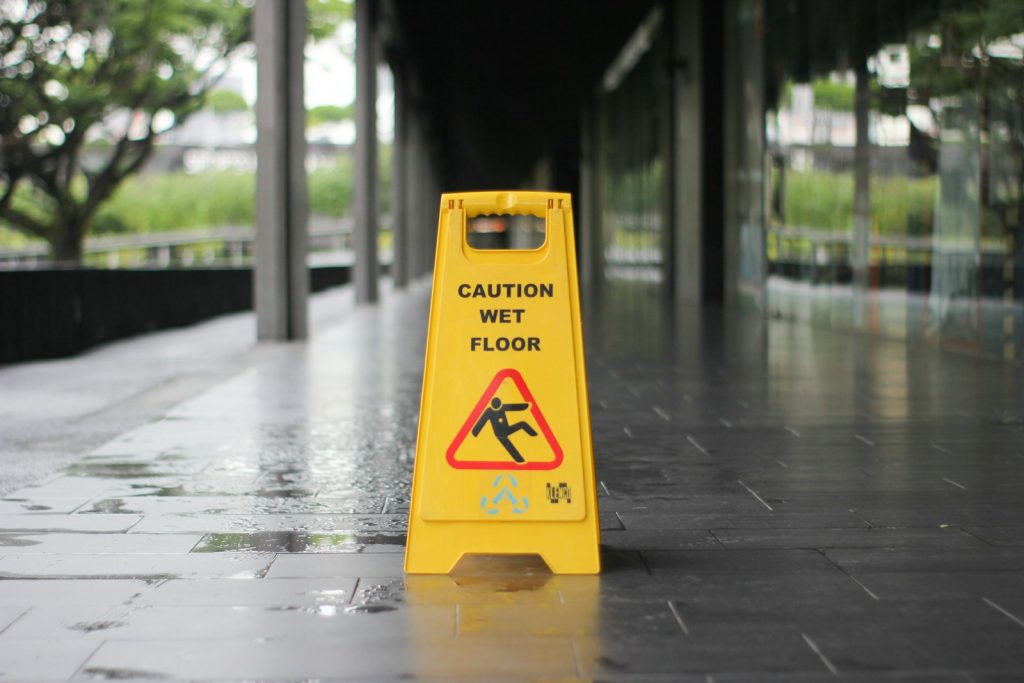
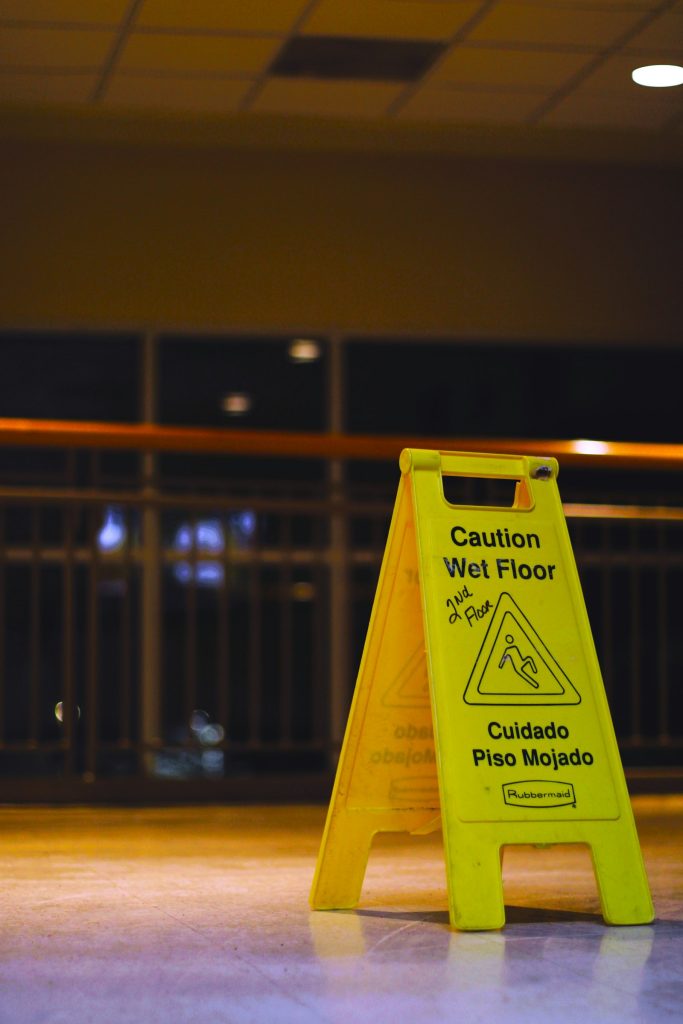
Elena, a 58-year-old home health aide from South Ozone Park, stops at a neighborhood supermarket on Rockaway Boulevard after a shift. It has been raining for hours. Just inside the automatic doors, the floor is shiny with water tracked in by customers. There is no mat at that spot, and a yellow wet-floor sign is folded and leaning against the wall near the carts.
Two steps past the door, her foot slides out. She lands on her right side and puts her hand out to catch herself. Her wrist takes the impact. A cashier comes over; another customer helps her to a chair. Her wrist is swelling fast.
What she does right (and what most people forget)
- She asks for an incident report and gets the manager’s name, although the store will not give her a copy on the spot.
- Her daughter, who arrives to drive her, takes photos of the wet floor, the missing mat, and the folded sign before anyone mops.
- She gets the other customer’s phone number. That witness saw the puddle before Elena fell.
- She goes straight to the emergency room instead of “seeing how it feels in the morning.”
At the hospital, an X-ray shows a distal radius fracture. Her arm is placed in a splint, and she is told to follow up with an orthopedist.
Chapter 2: The First Call to a Slip and Fall Accident Lawyer in Queens
Three days later, a claims adjuster from the store’s insurance company calls Elena. He is friendly. He asks whether she would agree to a short recorded statement “to get things moving,” and mentions that the store might cover her ER bill.
Elena does not give the statement. Instead, she calls a lawyer. In that first conversation, the lawyer focuses on three questions that will shape the entire case:
- Who owns and controls the property? A store may lease its space from a separate landlord. Both may have duties, and each may have its own insurer.
- Did the store create the hazard or know about it? In New York, a person hurt by a dangerous condition generally must show the owner created it or had actual or constructive notice of it, meaning the condition was visible and existed long enough that reasonable inspection would have found and fixed it.
- Is any public entity involved? If the fall had happened on city property or a public authority’s premises, a Notice of Claim would generally be due within 90 days under General Municipal Law §50-e. Here, the store is private, so the general three-year deadline of CPLR 214(5) applies, but the lawyer confirms ownership anyway.
The preservation letter
Within days, the lawyer sends the store and its insurer a letter demanding preservation of evidence: surveillance video from the entrance cameras for the hours before and after the fall, the incident report, floor inspection and sweep logs, mat rental or cleaning records, and the names of employees on duty. Many store camera systems record over themselves on a rolling basis. Without this letter, the single most important piece of evidence could disappear.
Chapter 3: Building the Notice Case
In a slip and fall, “the floor was wet” is only the beginning. The real fight is almost always over notice. Here is how the evidence in Elena’s illustrative case lines up:
- The weather. Records show steady rain for several hours before her fall. A store that knows rain is falling can anticipate water being tracked in.
- The missing mat and the folded sign. Her daughter’s photos suggest the store had safety equipment available but was not using it at the entrance.
- The witness. The other customer says the puddle was there when she walked in, roughly fifteen minutes earlier.
- The video. Once produced, the footage shows several customers slipping slightly in the same area before Elena fell, and no employee checking the floor during that window.
Together, that evidence supports an argument of constructive notice, and perhaps actual notice, since employees near the registers had a clear view of the entrance.
What the store will argue
Elena’s lawyer expects pushback, and it comes. The store’s likely defenses in a case like this include: the water was a normal, unavoidable result of rain and the store took reasonable precautions; there was not enough time to discover and clean it; and Elena was not watching where she was going. Each argument has to be met with specific facts, which is why the early photos and the video matter so much.
Chapter 4: Treatment, Bills, and the Weeks Off Work
Elena’s orthopedist recommends surgery to set the fracture with a plate and screws. After surgery come weeks in a cast and then months of occupational therapy to regain grip strength and range of motion. As a home health aide, she cannot lift or reposition patients one-handed, so she is out of work for an extended period.
Unlike a car accident, a slip and fall in a store does not trigger New York no-fault insurance, and there is no serious-injury threshold to clear. Elena’s health insurance pays most of her medical bills, subject to its right to be reimbursed from any recovery. Some commercial premises policies include a small “medical payments” coverage that pays regardless of fault, and her lawyer asks about it.
Meanwhile, the lawyer’s office keeps a running file of what the injury has cost and is costing her:
- Hospital, surgeon, anesthesia, imaging, and therapy bills
- Prescription and equipment costs
- Lost wages, documented by pay stubs and a letter from her agency
- Her own journal describing pain, sleep problems, and the everyday tasks she now needs help with, such as cooking, dressing, and carrying groceries up the stairs
Falls are a leading cause of injury for older adults, and the CDC’s falls resources explain why wrist and hip fractures can have lasting effects. Elena’s doctors note that she may develop arthritis in the joint and may not regain full strength. Those opinions will become central to valuing her claim.
Chapter 5: Filing the Lawsuit
About eight months after the fall, Elena’s treatment has stabilized enough that her doctors can describe her long-term outlook. The insurer’s early offer, made before surgery, did not account for any of that. Her lawyer files a lawsuit in Supreme Court, Queens County, naming the supermarket operator and the property owner. Information about the court system is available through the New York State Unified Court System.
Discovery
Over the following months, both sides exchange information. Elena’s lawyer obtains the full video, the store’s written floor-care policies, employee schedules, and the mat-service contract. That contract turns out to call for an entrance mat during wet weather. The store’s lawyers obtain Elena’s medical records and employment records.
Depositions
Elena testifies under oath about the fall, her injuries, and her life since. The store manager testifies about inspection routines. Under questioning, he acknowledges that no one was assigned to check the entrance that evening, and that the mat had been taken away for cleaning earlier in the day and not replaced.
The defense medical exam
The defense has a doctor of its choosing examine Elena. As is common, that doctor’s report minimizes her lasting limitations. Her own surgeon’s records and testimony are the counterweight.
Chapter 6: The Comparative Fault Fight
The store’s strongest argument is that Elena should have seen the water. It points to the video showing her looking toward the shopping carts as she walked in. In New York, a premises case like this one is governed by pure comparative fault: if a jury found Elena partly responsible, her damages would be reduced by her percentage of fault, but she would not be barred from recovering.
2026 update: In 2026, New York amended CPLR 1411 so that, in motor-vehicle personal injury actions commenced on or after May 26, 2026, a claimant more than 50 percent at fault recovers nothing. That change does not apply to slip and fall or other premises cases. A supermarket fall like Elena’s remains under pure comparative fault, where recovery is reduced by the injured person’s share of fault but not eliminated.
Her lawyer responds that customers are not required to stare at the floor every second, that the hazard was created by the store’s own decision to remove the mat, and that the store’s employees had a far better view of the entrance than any customer walking in from the rain.
Chapter 7: Mediation and Resolution
With depositions finished and medical opinions exchanged, the parties agree to mediation. A neutral mediator meets with both sides, pressure-tests each side’s arguments, and helps them negotiate. In this illustrative story, the case resolves at mediation. Before Elena agrees, her lawyer walks her through the net figure after her health insurer’s lien and case costs are addressed, so she understands exactly what she will receive.
That outcome is not guaranteed in any real case. Many claims settle earlier, some settle on the eve of trial, and some go to verdict. Some are lost. The value of a case depends on liability evidence, the severity and permanence of the injury, the insurance available, and many other factors.
How the Story Changes With Different Facts
Change one detail and the legal path changes too:
- If Elena had slipped on ice on the sidewalk outside. Under NYC Administrative Code §7-210, the owner of the abutting property is generally responsible for sidewalk maintenance, except for owner-occupied one- to three-family homes, where the City remains responsible subject to prior written notice rules under §7-201. Snow and ice cases also raise questions about how long after a storm the owner had to clear the walkway.
- If she had fallen in a city building or on NYCHA or transit property. The 90-day Notice of Claim deadline would control, along with a possible 50-h hearing.
- If she had tripped rather than slipped. Defects like broken tiles, uneven pavement, or loose carpet raise different notice and “trivial defect” arguments, covered in our guide to a trip and fall accident lawyer in Queens.
- If she had been working at the time. Workers’ compensation would generally come first, though a claim against a property owner other than her employer might still be possible.
- If her injury had come from a vehicle instead. A delivery truck backing into a customer in a parking lot is a motor-vehicle case with different rules, discussed in our UPS truck accident guide.
Lessons From the Case Study
Strip away the story and a handful of practical lessons remain, and they apply to almost every Queens slip and fall:
- Photos in the first ten minutes can matter more than anything that comes later.
- Video is often the deciding evidence, and it is often overwritten quickly. A prompt preservation demand protects it.
- Notice is the battleground. How long the hazard existed, and whether the owner knew or should have known, decides many cases.
- Early offers usually come before the full medical picture is known.
- Ownership questions can change the deadline from three years to 90 days.
For more background on these claims across the borough, see our main page on slip and fall claims in Queens. Residents near the Nassau border can also read about our work as a slip and fall accident lawyer in Bellerose, and you can check the full list of neighborhoods and communities we serve.
Three Queens Landmarks Where Floors and Crowds Meet
Places with heavy foot traffic, changing weather at the doors, and polished floors are where slip hazards multiply. These three Queens destinations illustrate the range.
Resorts World New York City at Aqueduct
Resorts World New York City is the casino and entertainment complex at Aqueduct Racetrack in South Ozone Park, near Rockaway Boulevard and the Aqueduct Racetrack stop on the A train. It draws crowds day and night, many arriving by car via the Belt Parkway and the Conduit Avenue service roads. Large entrances, rain and snow tracked in from parking areas, and spilled drinks on gaming floors are the kinds of conditions that require constant inspection. It is also only a short drive from our Rosedale office, making it a practical starting point for directions.
LaGuardia Airport
LaGuardia Airport in East Elmhurst, along the Grand Central Parkway and Flushing Bay, has undergone a major rebuilding of its terminals in recent years. Airports combine polished terminal floors, escalators, moving walkways, spilled liquids, and travelers rushing with luggage and their eyes on departure boards. LaGuardia is operated by the Port Authority of New York and New Jersey, and claims involving public agencies and bi-state authorities can carry their own strict notice requirements and short deadlines, so travelers hurt there should seek advice quickly.
Kingsland Homestead
Kingsland Homestead is an eighteenth-century house in Flushing that serves as the home of the Queens Historical Society. It sits in Weeping Beech Park, near the Bowne House and the busy blocks around 37th Avenue and Parsons Boulevard. Historic sites like this one have older stairs, uneven thresholds, and narrow passages that visitors are not used to. The surrounding downtown Flushing sidewalks, among the most crowded in Queens, add wet pavement, cluttered storefronts, and grates to watch for.
Directions to Our Rosedale Office from Resorts World
From Resorts World at Aqueduct, head south to North Conduit Avenue and get on the Belt Parkway eastbound, passing JFK Airport on your right. Continue toward the Cross Island Parkway interchange and exit toward Rosedale; 1 Cross Island Plaza is just off the parkway near the Laurelton and Rosedale border. In light traffic the drive is short; the live map below shows current conditions.
Slip and Fall Questions We Hear From Queens Residents
Does a wet floor automatically mean the store is liable?
No. New York generally requires the injured person to show that the owner created the dangerous condition or had actual or constructive notice of it, meaning it was visible and present long enough that reasonable inspection would have revealed it. Evidence like video, inspection logs, witness accounts, and weather records is used to prove how long the hazard existed and whether the owner acted reasonably.
How long do I have to bring a slip and fall claim in Queens?
Against a private owner or business, the general deadline is three years under CPLR 214(5). If the property belongs to New York City or many public authorities, a Notice of Claim is generally required within 90 days, and a lawsuit generally within one year and 90 days. Because ownership is not always obvious, confirm it early.
Will no-fault insurance pay my medical bills after a fall?
Generally not. No-fault applies to motor vehicle accidents. After a slip and fall, medical bills are usually paid by your own health insurance, which may seek reimbursement from any recovery. Some property insurance policies include limited medical payments coverage that applies regardless of fault. If you fell at work, workers’ compensation generally applies instead.
What if I was looking at my phone when I fell?
That may be raised to argue comparative fault. In New York premises cases, pure comparative fault applies: your recovery is reduced by your share of responsibility but not eliminated. The 2026 change that bars recovery above 50 percent fault applies only to motor-vehicle cases, not slip and fall claims.
Who is responsible if I slip on ice on a Queens sidewalk?
Under NYC Administrative Code §7-210, the owner of the property next to the sidewalk is generally responsible for maintaining it, including reasonable snow and ice removal. The exception is owner-occupied one- to three-family homes, where the City is generally responsible, subject to prior written notice rules. Timing after a storm can also affect liability.
Should I give a recorded statement to the store’s insurer?
It is usually wise to speak with a lawyer first. Adjusters are trained to ask questions that can be used to minimize your injuries or suggest you were careless. You can politely decline a recorded statement until you have advice. Never sign a release or medical authorization you do not understand.
What if the store says it has no video?
Sometimes footage truly never existed; sometimes it was overwritten. A prompt written preservation demand creates a record that the owner was told to keep it. If evidence is destroyed after that, courts have tools to address the loss. That is why contacting a lawyer within days, not months, can make a real difference.
I fell at LaGuardia. Are the rules different?
They can be. LaGuardia is operated by the Port Authority of New York and New Jersey, and claims against public and bi-state agencies can involve special notice requirements and shorter deadlines. Some airport areas are controlled by airlines or concession operators instead. Identifying the responsible entity quickly is essential.
What compensation is available after a slip and fall?
Depending on the facts, a claim may include medical expenses, lost wages and earning capacity, and pain and suffering, including loss of enjoyment of life. Because slip and fall cases are not subject to the motor-vehicle serious-injury threshold, the focus is on proving the owner’s negligence and documenting the injury’s full effect on your life.
How far is your office from Ozone Park and Jamaica?
Our office at 1 Cross Island Plaza, Suite 325, in Rosedale is a short drive from South Ozone Park and Jamaica by way of the Belt Parkway or Conduit Avenue. If an injury makes travel hard, call 718.775.3110 and we can start by phone.
Related: For a full overview of how our firm handles these claims, visit our Slip And Fall Accident Lawyer in Queens page.
Talk to a Slip and Fall Accident Lawyer in Queens
Elena’s story is fictional, but the steps are real: document the scene, get medical care, protect the video, and let someone who understands notice rules build the claim. A Slip and Fall Accident Lawyer in Queens can confirm who owns the property, which deadline applies, and how to respond when the insurer calls.
Call Yakov Mushiyev & Associates, P.C. at 718.775.3110 or contact the firm online. Our office is in Rosedale, Queens. You can also read more about our firm and Yakov Mushiyev.
General information, not legal advice. Attorney Advertising. Prior results do not guarantee a similar outcome.