
Most of the mistakes we see after a crash with a brown UPS package car are not dramatic. Nobody lies, nobody hides. Instead, an injured person quietly relies on a rule that sounds right but isn’t: a deadline they think is longer than it is, a notice requirement they think applies when it doesn’t, or a threshold they assume they’ve cleared. This guide from a UPS truck accident lawyer in Queens walks through those rules one at a time, carefully, so you know exactly which clocks are running and which ones are not.
We are Yakov Mushiyev & Associates, P.C., a personal injury firm with an office at 1 Cross Island Plaza in Rosedale. We wrote this for people who were hit by, or rode in a vehicle struck by, a UPS delivery truck somewhere in the borough, whether on a residential block in Bayside or along a commercial strip like Jamaica Avenue. Read it once for the big picture, then come back to the specific rule that fits your situation.
Why the Rules Matter More Than Usual in a UPS Truck Accident Claim
A UPS crash looks, at first glance, like any other motor vehicle collision. There is a driver, a vehicle, an insurer, and an injured person. But three features make precision especially important.
- The defendant is a large private company, not a government agency. That changes which deadlines apply, and many people get this backwards.
- The vehicle is a commercial truck. Depending on its weight and how it operates, federal safety regulations may govern the driver’s hours and the vehicle’s maintenance, which creates records that can disappear if no one asks for them.
- The injury claim still runs through New York’s motor vehicle system. That means no-fault insurance, the serious injury threshold, and, for cases started on or after May 26, 2026, a new comparative fault rule.
Each of those features carries its own fine print. Below, we take them one at a time.
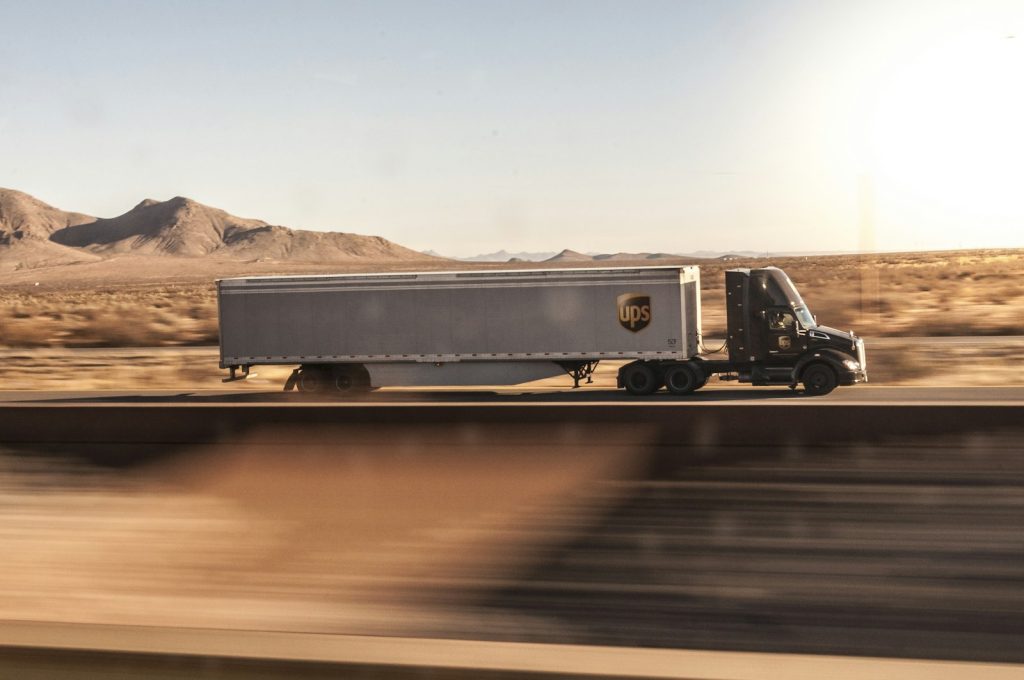
Rule One: The Three-Year Deadline, and What It Does Not Cover
What people assume: “I have three years, so there’s no rush.”
What the rule actually says: Under CPLR 214(5), most New York personal injury lawsuits must be started within three years of the injury. A claim against UPS and its driver for a crash on Northern Boulevard or Merrick Boulevard generally falls under this rule. That much is true.
The misunderstanding is in treating the three-year statute of limitations as the only deadline. It is the outer wall, not the first door. Several shorter clocks start running on the day of the crash:
- The no-fault application. Generally due within 30 days of the accident. Miss it, and you may be fighting for your own medical bills rather than having them paid.
- The police accident report and MV-104. Drivers must file a DMV report within 10 days when anyone is injured or killed or property damage exceeds $1,000.
- Evidence that has no legal deadline at all. Dashcam footage, telematics data, and store surveillance video from a nearby bodega or gas station can be overwritten in days or weeks. No statute protects them unless someone sends a timely preservation demand.
So the accurate answer is: you may have three years to file the lawsuit, but the decisions that shape the lawsuit usually happen in the first few weeks.
Rule Two: The 90-Day Notice of Claim Usually Does Not Apply to UPS
What people assume: “Truck accidents have a 90-day deadline.”
What the rule actually says: New York’s 90-day Notice of Claim requirement under General Municipal Law §50-e applies to claims against the City of New York, its agencies, and many public authorities. It is why a crash involving a DSNY garbage truck or an MTA bus demands immediate action. UPS is a private corporation. A claim against UPS and its employee driver is not a claim against a municipality, so §50-e does not, by itself, apply.
Here is where precision matters. Plenty of UPS crashes in Queens involve a public party as well. Consider an illustrative scenario: a UPS package car swerves to avoid a city sanitation truck backing out of a side street off Hillside Avenue, and the UPS truck strikes your car. Now there may be two defendants, one private and one municipal, and the 90-day notice clock applies to the city claim. Likewise, if a defective traffic signal or a road condition maintained by the city contributed, a city claim may be in play.
The practical rule: assume the 90-day clock might be running until someone has confirmed every vehicle and every property owner involved. Then you’ll know for certain whether it applies.
Rule Three: Who Is Actually Responsible When a UPS Truck Hits You
What people assume: “It was the driver’s fault, so I have to sue the driver.”
What the rule actually says: New York law reaches beyond the person behind the wheel. Two separate principles often apply in a UPS case.
Employer liability
UPS drivers are generally UPS employees, unlike some other delivery networks that rely heavily on independent contractor companies. When an employee causes a crash while doing the job, the employer is typically responsible for that negligence. A driver making deliveries on a route through Forest Hills or Fresh Meadows is usually acting within the scope of employment.
Owner liability under VTL §388
Separately, Vehicle and Traffic Law §388 makes a vehicle’s owner vicariously liable for the negligence of anyone driving it with permission. If the truck was owned by UPS or a leasing entity, that owner may share responsibility.
Careful wording matters here, so we will be careful: the exact defendants depend on the facts. A truck may be owned by one company and operated by another, or a crash may involve a tractor-trailer pulling freight under a different arrangement. Identifying the correct entities early prevents a claim from being filed against the wrong party. If you want a broader look at how commercial vehicle cases work across the state, our overview of truck accident claims in New York covers the framework.
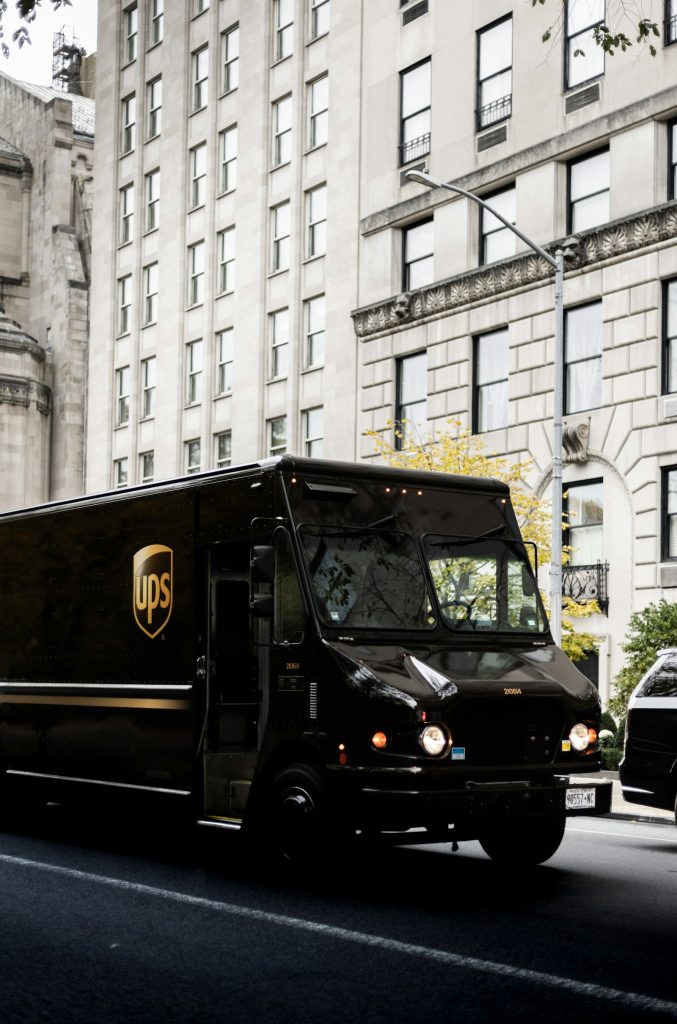
Rule Four: Federal Trucking Rules May Apply, but Not Automatically
What people assume: “Every truck driver has to follow federal hours-of-service rules.”
What the rule actually says: The Federal Motor Carrier Safety Administration’s hours-of-service regulations limit how long drivers of property-carrying commercial motor vehicles may drive. For those drivers, the core limits are 11 hours of driving after 10 consecutive hours off duty, a 14-hour on-duty window, and a 30-minute break after 8 cumulative hours of driving. Many carriers track compliance with electronic logging devices.
Whether these rules govern a particular UPS vehicle depends on its weight rating and whether it operates in interstate commerce, among other factors. A large tractor-trailer hauling packages between hubs on the Van Wyck or the Long Island Expressway is a different regulatory animal from a smaller vehicle used on a neighborhood route. Even when federal rules do not apply, the company’s own scheduling, route data, and telematics can show whether a driver was rushed, fatigued, or distracted.
A similar point applies to insurance. Federal law sets a minimum liability amount of $750,000 for interstate for-hire carriers of general freight, with higher minimums for hazardous materials. That minimum does not tell you what coverage actually exists in a particular case; large companies often have their own arrangements. The precise answer comes from discovery, not assumptions.
Rule Five: Parkways, Double Parking, and Where UPS Trucks Are Allowed
What people assume: “A truck can drive anywhere a car can.”
What the rule actually says: Commercial vehicles are banned from New York’s parkways, including the Grand Central, the Cross Island, the Belt, and the Jackie Robinson. That is why delivery trucks crossing eastern Queens funnel onto the Van Wyck, the Clearview, the LIE, and surface arteries like Francis Lewis Boulevard, Union Turnpike, and Woodhaven Boulevard. If a UPS truck was on a parkway when it crashed, that fact alone may be significant evidence of a routing or supervision failure.
Double parking is the other everyday reality. Delivery trucks routinely stop in travel lanes on streets like Austin Street, Main Street in Flushing, and Steinway Street in Astoria. A stopped truck can block sightlines for pedestrians stepping out from between vehicles and for cyclists forced into traffic. Where a truck was stopped, whether its hazards were on, and whether the driver opened a door or reversed without checking are all questions that shape fault.
Rule Six: No-Fault Comes First, Even When UPS Is Clearly at Fault
What people assume: “UPS caused this, so UPS pays my doctor.”
What the rule actually says: New York is a no-fault state. Under Insurance Law Article 51, basic economic loss is paid regardless of who caused the crash, up to $50,000 per person. That covers necessary medical expenses, 80% of lost earnings up to $2,000 per month, and up to $25 per day for other reasonable and necessary expenses. If you were driving or riding in your own car, your own policy is usually the starting point. If you were a pedestrian or bicyclist struck by the UPS truck, you generally claim no-fault benefits through the insurance covering that vehicle.
Three precision points people miss:
- The 30-day application window. The no-fault application is generally due within 30 days of the accident. A late application can be denied.
- Motorcyclists are different. Motorcycle operators and passengers are not covered by New York no-fault, so a rider struck by a UPS truck must look to other sources for medical bills.
- No-fault is not the whole claim. Economic loss above the no-fault limits, and pain and suffering if you meet the threshold described next, can be pursued against UPS and other at-fault parties.
The New York Department of Financial Services keeps a useful consumer guide to auto insurance if you want to read how these benefits are structured.
Rule Seven: The Serious Injury Threshold Is a Legal Definition, Not a Feeling
What people assume: “I’m in real pain, so I can sue for pain and suffering.”
What the rule actually says: To recover non-economic damages after a motor vehicle accident in New York, you must show a “serious injury” as defined in Insurance Law §5102(d). The categories include a fracture, significant disfigurement, permanent loss of use of a body organ or member, a permanent consequential limitation, a significant limitation of use of a body function or system, and death, among others.
Notice the language: “permanent,” “consequential,” “significant.” Courts look for objective medical evidence, such as imaging, measured range-of-motion testing, and consistent treatment records. A gap in treatment, or a doctor’s note that just says “patient reports pain,” can make the threshold harder to prove. This is one of the most misunderstood parts of New York injury law, and it is why steady, documented medical care matters from the first week.
2026 update: Legislation signed in late May 2026, effective May 26, 2026, changed two rules for motor-vehicle personal injury actions commenced on or after that date. First, the “90/180-day” category was removed from the serious injury definition in §5102(d). Second, CPLR 1411 now applies modified comparative fault to these cases: a claimant whose share of fault is greater than the defendants’ combined fault recovers nothing, while a claimant at 50% or less has recovery reduced by their percentage. Cases commenced earlier follow the prior rules.
Rule Eight: Comparative Fault After a UPS Truck Accident in Queens
What people assume: “If I was partly at fault, I can’t recover anything.” Or the opposite: “Fault doesn’t matter in New York.”
What the rule actually says: Both are wrong, and the answer now depends on timing. Historically, New York used pure comparative fault, meaning an injured person’s recovery was reduced by their own percentage of fault but not eliminated. For motor-vehicle cases commenced on or after May 26, 2026, the amended CPLR 1411 applies a modified rule: more than 50% at fault means no recovery; 50% or less means a proportional reduction.
Because UPS trucks make frequent stops, many crashes are rear-end collisions. Under New York case law, a rear-end collision with a stopped or stopping vehicle generally creates a presumption that the rear driver was negligent, unless that driver offers a non-negligent explanation. If a UPS truck rear-ended you on Queens Boulevard, that presumption helps. If you rear-ended a UPS truck that stopped suddenly or was double-parked without hazards, the analysis becomes more nuanced, and the facts around the stop will matter a great deal.
Rule Nine: The Evidence That Belongs to UPS, Not to You
Most of the strongest evidence in a UPS case sits in the company’s systems. Depending on the vehicle and the facts, that can include:
- GPS, telematics, and route data showing speed, braking, and stop locations;
- Electronic logging device records and duty status, where federal rules apply;
- Forward-facing or driver-facing camera footage;
- Vehicle maintenance, inspection, and repair records;
- The driver’s training, qualification, and safety history;
- Internal incident reports completed after the crash.
None of this is yours to collect directly, and none of it is guaranteed to be kept forever. A written preservation (spoliation) letter, sent quickly, puts the company on notice that the material is relevant to a potential claim. Meanwhile, you can protect what is yours: photos of the scene, the truck’s number, witness names, the police report number, and every medical record. If the DMV report applies to you, the MV-104 form is the one to file within 10 days.

How a UPS Case Differs From Other Delivery Truck Cases
People often lump every delivery van together. The law does not. With UPS, the driver is generally a company employee, which often simplifies the question of who answers for the driver’s conduct. With some other networks, the driver may work for an independent contractor company, adding a layer of analysis. Our page on FedEx truck crashes in Queens explains how that contractor structure can change things. For collisions that don’t involve a commercial carrier at all, our guide for motor vehicle accident victims in Queens covers the general rules.
If you live or work just over the line in eastern Queens, our page for the Bellerose UPS truck accident practice addresses that neighborhood’s corridors, including Hillside Avenue and Jamaica Avenue near the Nassau border.
Three Queens Landmarks and the Delivery Traffic Around Them
Cunningham Park
Cunningham Park is one of the largest parks in Queens, spreading across the Fresh Meadows, Oakland Gardens, and Hollis Hills area of eastern Queens. It is known for wooded trails, ball fields, tennis courts, and a preserved stretch of the old Long Island Motor Parkway that now serves walkers and cyclists. The Clearview Expressway cuts through the park, and Francis Lewis Boulevard and Union Turnpike run along its edges. Because trucks are barred from the nearby Grand Central Parkway, delivery vehicles serving these residential neighborhoods lean heavily on Francis Lewis Boulevard and Union Turnpike, which puts package trucks alongside park visitors crossing to and from the entrances.
Brookville Park in Rosedale
Brookville Park sits in Rosedale, a short distance from our office, between Brookville Boulevard and the residential streets of southeast Queens. It offers ponds, wetlands, playing fields, and tennis and basketball courts, and it is a neighborhood gathering spot in warm weather. The surrounding roads connect to South Conduit Avenue and the Belt Parkway interchange area, so the park sees a mix of local traffic and through traffic. Delivery trucks working the one- and two-family blocks around the park make frequent stops, and drivers should expect children and dog walkers near the park edges.
MoMA PS1
MoMA PS1 is a contemporary art institution in Long Island City, affiliated with the Museum of Modern Art and housed in a former public school building near Jackson Avenue and Court Square. Its summer music events and rotating exhibitions draw large crowds. Long Island City’s mix of new residential towers, offices, and light industry generates heavy delivery traffic, and trucks double-park on narrow streets near Jackson Avenue and the approaches to the Pulaski Bridge. Visitors walking from the Court Square subway stations cross busy commercial routes where package trucks are frequently loading.
Directions to Our Rosedale Office from Cunningham Park
From Cunningham Park, the most direct drive is to take Francis Lewis Boulevard south through Hollis, Queens Village, Cambria Heights, and Laurelton toward Rosedale. Alternatively, drivers in passenger cars can pick up the Cross Island Parkway southbound and follow it to the Belt Parkway interchange near the Nassau border. Our office at 1 Cross Island Plaza, Suite 325, sits just off that interchange in Rosedale, with nearby access from Brookville Boulevard.
Frequently Asked Questions About UPS Truck Crashes
Do I need to file a 90-day Notice of Claim against UPS?
Generally, no. The 90-day Notice of Claim under General Municipal Law §50-e applies to claims against New York City, its agencies, and many public authorities, not private companies like UPS. However, if a city vehicle, an MTA bus, or a city-maintained road condition also played a role, a separate notice may be required within 90 days for that part of the claim. Until every party has been identified, it is safest to assume the short deadline could apply.
How long do I have to sue after a UPS truck accident in Queens?
Most personal injury lawsuits in New York must be filed within three years under CPLR 214(5). Shorter deadlines can apply in specific situations, including claims against public entities and wrongful death claims, which generally must be filed within two years of death. Separately, the no-fault application is generally due within 30 days, so waiting until near the end of the three-year period can cost you benefits and evidence along the way.
Is UPS responsible for its driver’s mistakes?
UPS drivers are generally company employees, and employers are typically responsible for an employee’s negligence while performing job duties. In addition, VTL §388 can make a vehicle’s owner liable for a permissive driver’s negligence. The exact defendants depend on who owned and operated the vehicle and what the driver was doing at the time, so the facts of each crash need to be confirmed before a claim is filed.
Who pays my medical bills right after the crash?
In most cases, New York no-fault insurance pays first, regardless of fault, up to $50,000 per person in basic economic loss. Car occupants usually claim through their own vehicle’s policy; pedestrians and bicyclists struck by a truck generally claim through the vehicle’s insurer. Motorcycle riders are not covered by New York no-fault. File the no-fault application quickly, since it is generally due within 30 days.
What counts as a serious injury in New York?
Insurance Law §5102(d) lists categories such as fractures, significant disfigurement, permanent loss of use, permanent consequential limitation, significant limitation of a body function or system, and death. Proving these usually requires objective medical evidence and consistent treatment. For motor-vehicle cases commenced on or after May 26, 2026, the former “90/180-day” category is no longer part of the definition.
I rear-ended a UPS truck that stopped suddenly. Do I have a case?
Possibly, but it is harder. New York courts generally presume the rear driver negligent in a rear-end collision unless there is a non-negligent explanation. A truck that stopped abruptly in a travel lane, double-parked without hazard lights, or cut in front of you may shift some responsibility. Under the 2026 modified comparative fault rule, your share of fault must be 50% or less to recover in motor-vehicle cases commenced on or after May 26, 2026.
Can UPS trucks drive on the Belt or Cross Island Parkway?
No. Commercial vehicles are banned from New York parkways, including the Belt, Cross Island, Grand Central, and Jackie Robinson. Trucks crossing Queens are expected to use expressways like the Van Wyck, Clearview, and LIE, or surface streets. If a UPS truck crashed on a parkway, that fact may be relevant to how the driver was routed, trained, or supervised.
What evidence should I save after a UPS truck crash?
Photograph the scene, the vehicles, the truck’s markings and number, and your injuries. Collect witness names and contact information, the police report number, and your medical records. Note any nearby businesses with cameras along streets like Jamaica Avenue or Northern Boulevard, since footage can be overwritten quickly. Company data, such as telematics and camera footage, generally requires a prompt preservation letter.
I was a pedestrian hit by a UPS truck that was backing up. What rules apply?
Drivers have a duty under VTL §1146 to exercise due care to avoid colliding with pedestrians and bicyclists. Backing a large truck without a spotter, adequate mirrors, or checking behind the vehicle can be strong evidence of negligence. Your medical bills generally start with no-fault through the truck’s insurance, and a claim for additional losses can follow if you meet the serious injury threshold.
Will my case go to court?
Many injury claims resolve without a trial, but there is no way to know in advance. Starting a lawsuit is sometimes necessary to obtain records from a large company through discovery or to protect the statute of limitations. Our general personal injury FAQ page explains the stages of a typical case, from the first consultation through discovery and resolution.
Related: For a full overview of how our firm handles these claims, visit our UPS Truck Accident Lawyer in Queens page.
Talk to a UPS Truck Accident Lawyer in Queens Before the Short Clocks Run Out
The rules above are precise for a reason: each one can quietly reduce or end a claim if it is misread. If you were hurt in a crash with a UPS truck anywhere in the borough, a UPS truck accident lawyer in Queens can confirm which deadlines apply to you, identify the right defendants, and send preservation demands before company data is lost. Call Yakov Mushiyev & Associates, P.C. at 718.775.3110, or contact our Rosedale office online to arrange a consultation. Our office is at 1 Cross Island Plaza, Suite 325, Rosedale, NY 11422.
General information, not legal advice. Attorney Advertising. Prior results do not guarantee a similar outcome.