
A fall inside a store or on an icy parking lot raises one legal question before any other: who was responsible for the condition that caused it? This guide explains how New York law answers that question, what evidence tends to decide it, and which deadlines apply in Nassau County. It is written for anyone who has been hurt in Valley Stream and is deciding whether to speak with a slip and fall lawyer Valley Stream residents can meet without leaving the neighborhood, since our office at 1 Cross Island Plaza sits just across the Queens line.
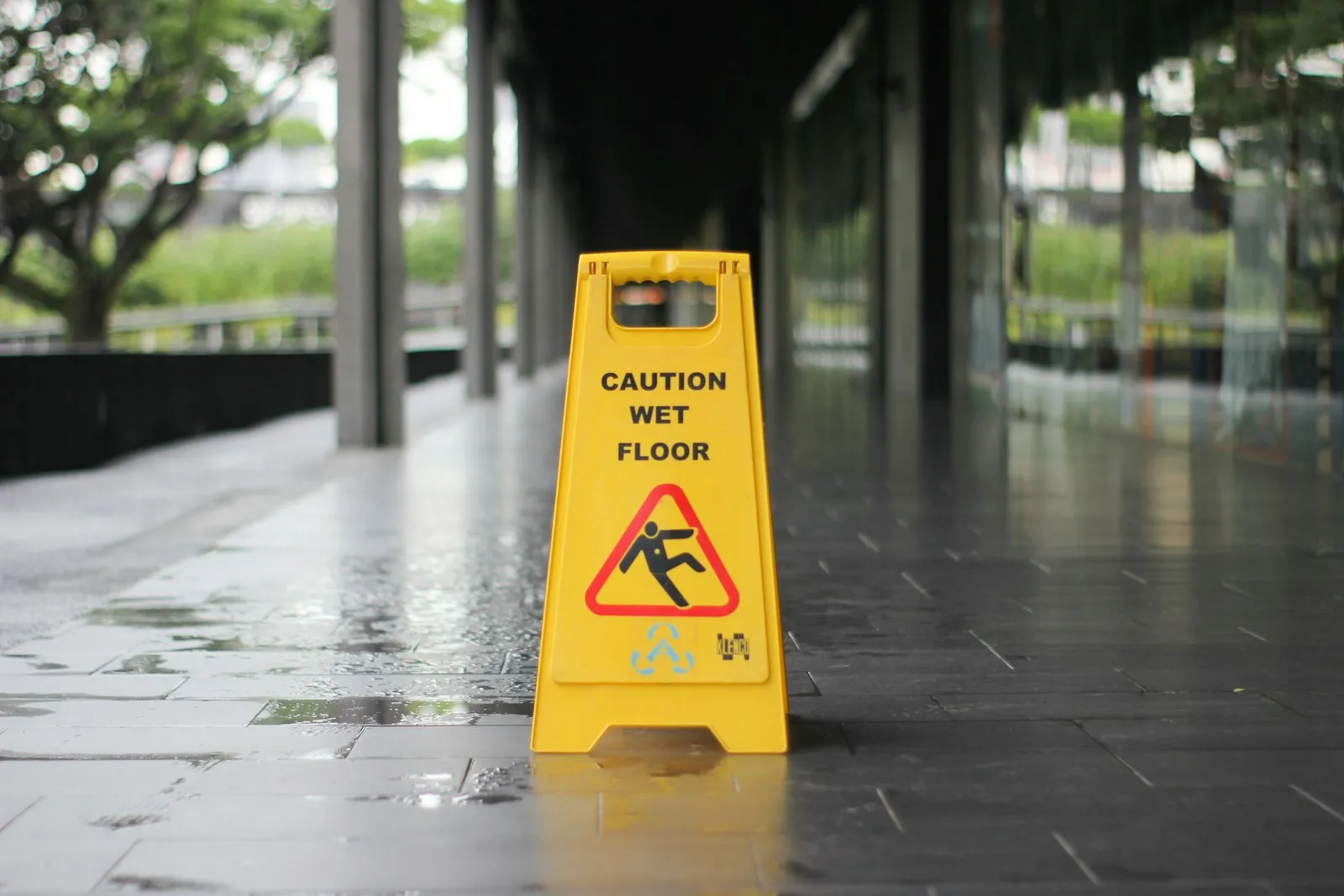
Where Falls Happen in Valley Stream
Valley Stream is a village in the Town of Hempstead, and much of its daily traffic moves through large commercial spaces. The Green Acres Mall area draws heavy foot traffic, and the shopping centers along Sunrise Highway and Rockaway Avenue add supermarkets, big-box retailers and wide surface lots. Residential streets bring their own conditions: apartment building lobbies and stairwells, private walkways, and public sidewalks maintained by different owners and agencies.
Each setting tends to produce a recognizable kind of hazard:
- Retail floors: spilled liquids, dropped merchandise, freshly mopped tile without a warning sign, and loose mats at entrances on rainy days.
- Supermarkets: produce and refrigeration aisles, where water, ice and crushed fruit can collect on smooth flooring.
- Parking lots: snow and ice that was plowed into ridges or left to refreeze, potholes, and broken curb stops.
- Apartment buildings: worn or uneven stair treads, missing handrails, burnt-out lighting and wet lobby floors.
- Sidewalks: raised or cracked slabs, tree-root heaving, and depressions around utility covers.
The setting matters because it often determines who the defendant is. A store tenant, a mall owner, a property management company and a municipality can each carry different duties, and the claim against each one follows its own rules. Our main Valley Stream personal injury page describes the broader range of cases we handle in the village.

The Legal Standard: Premises Liability Defined
Premises liability is the body of law that governs injuries caused by unsafe conditions on property. In New York, a fall alone does not establish that anyone is at fault. The injured person generally has to show that the owner or occupier of the property either created the dangerous condition or had notice of it and failed to correct it within a reasonable time. Our premises liability practice page covers this standard in more depth.
Three terms carry most of the weight in these cases:
| Term | What it means | Example |
|---|---|---|
| Created the condition | The owner, occupier or its employees caused the hazard themselves. | An employee mops an aisle and leaves no warning sign. |
| Actual notice | The owner or its staff knew about the hazard. | A customer reported a spill to a cashier before the fall. |
| Constructive notice | The hazard was visible and apparent and existed long enough that a reasonable owner should have discovered and fixed it. | A puddle with shopping-cart tracks running through it, suggesting it had been there for some time. |
Constructive notice is the most frequently disputed of the three. A defense attorney will often argue that a spill appeared seconds before the fall, leaving no reasonable opportunity to clean it. The response usually comes from physical details: footprints or cart tracks through the liquid, dirt at its edges, or testimony that the area looked the same for a while. Cleaning logs and inspection schedules can also show how long the area went unchecked.
The distinction between an owner and an occupier is worth noting. In a mall, the store that leases a space typically controls its own sales floor, while the mall owner or its management company often controls common corridors, entrances and parking areas. Identifying who controlled the exact spot where you fell is one of the first tasks a slip and fall attorney undertakes.
Snow, Ice and the Timing of Storms
Winter falls in parking lots and on walkways raise an additional question: how much time did the owner have to deal with the weather? New York courts often give property owners a reasonable time after a storm ends to clear snow and ice before liability can attach. This idea is commonly called the storm-in-progress doctrine, and its application depends heavily on the facts of each case, including weather records and the exact timing of the fall.
That said, an owner who does choose to clear snow is generally expected not to make conditions worse. Plowing snow into piles that melt across a walkway and refreeze, or clearing only part of a path, can become the basis of a claim. In a large Sunrise Highway lot, for instance, the questions are often when the plowing happened, whether salt or sand was applied, and whether meltwater from snow banks was allowed to run across pedestrian routes.
Claims Against the Village, the Town or the County
When a fall happens on public property, such as a municipal sidewalk, a village building or a county facility, the claim proceeds against a government entity. Depending on the location, that may be the Village of Valley Stream, the Town of Hempstead or Nassau County. These claims carry shorter deadlines and additional procedural steps.
- Notice of claim: Under General Municipal Law § 50-e, a written notice of claim generally must be served within 90 days of the incident.
- Examination: The municipality may demand a hearing, often called a 50-h hearing, at which you answer questions under oath. Our guide to the 50-h hearing explains what to expect.
- Lawsuit: Under General Municipal Law § 50-i, the suit itself generally must be filed within 1 year and 90 days.
Sidewalk claims involve one more requirement that often surprises people. Many municipalities have adopted prior written notice laws, which often bar a claim over a sidewalk defect unless the municipality had received written notice of that specific defect before the fall. Whether such a law applies, and whether an exception might, is a question to raise early. Our article on filing a notice of claim against a Nassau County municipality walks through the paperwork.
Not every sidewalk belongs to the government in practice, either. Responsibility for a stretch of pavement in front of a commercial property can depend on local rules and on who caused the defect, so the property owner may be a party alongside, or instead of, the municipality.

Deadlines at a Glance
The time limits differ sharply depending on who owned or controlled the property. The table below summarizes the general rules.
| Defendant | First step | Deadline to sue |
|---|---|---|
| Private owner, store or landlord | No notice of claim required | Generally 3 years under CPLR § 214 |
| Village, town or county | Notice of claim, generally within 90 days | Generally 1 year and 90 days |
Lawsuits arising in Valley Stream are typically filed in Nassau County Supreme Court in Mineola. Because the 90-day window for municipal claims is short, and because it is not always obvious at first whether a location is public or private, it is sensible to have the question reviewed soon after the injury.
Evidence That Decides Premises Cases
Notice is proven or disproven with evidence, and much of that evidence is perishable. The following items carry the most weight:
- Photographs: pictures of the hazard itself, taken as close to the time of the fall as possible, along with wider shots that show lighting, signage and the surrounding floor or pavement.
- Incident report: most stores and property managers prepare one. Ask that a report be made, note the name of the employee who took it, and request a copy.
- Store video: surveillance footage can show how long a hazard was present and whether staff walked past it. Many systems record over older footage on a rolling basis, so a written request to preserve it should be sent quickly.
- Witnesses: names and phone numbers of other shoppers, tenants or employees who saw the condition or the fall.
- Footwear: keep the shoes you were wearing, unwashed and unrepaired. The defense may argue that footwear, not the floor, caused the fall.
- Medical records: prompt treatment documents the injury and links it to the date of the incident.
A written record of symptoms also helps. Our article on keeping an injury diary explains what to track and why it matters later.
Shared Fault and How It Affects Recovery
Property owners frequently argue that the injured person should have seen the hazard. New York addresses this through pure comparative fault under CPLR § 1411. The term means that a person who bears some share of responsibility can still recover, but the award is reduced by that share. A shopper found partly at fault for looking at a phone, for instance, would see compensation reduced in proportion rather than eliminated. Our comparative negligence guide explains the calculation.
Insurers also tend to contact injured people early. If an adjuster for a store or landlord is pressing for a recorded statement, our piece on handling pressure from an adjuster in Valley Stream is a useful reference.
How We Handle These Claims
As a slip and fall lawyer Valley Stream clients can reach easily from the Cross Island Parkway, attorney Yakov Mushiyev and our team begin by identifying who controlled the property and which deadline applies. We then work to secure video, reports and witness information before they disappear. The firm has recovered over $80 million for injured New Yorkers, offers a free consultation, and charges no fee unless we win. We speak English, Russian and Spanish, and we can meet at your home, in the hospital or by video. Neighbors in nearby communities face similar questions; our guides for Elmont and Lynbrook cover their own local conditions. To discuss your fall, contact our office or call 718.775.3110.
Frequently Asked Questions
Do I need a slip and fall lawyer Valley Stream residents recommend if the store offered to pay my medical bills?
An offer to cover some bills does not necessarily reflect the full value of a claim, and accepting payment may come with conditions. Having the offer reviewed before signing anything is generally wise.
What if no one saw the spill before I fell?
Witnesses help, but they are not the only route. Constructive notice can often be shown through the appearance of the hazard, video footage and inspection records that reveal how long the area went unchecked.
I fell on a sidewalk outside a store on Rockaway Avenue. Who is responsible?
It depends on who owned and maintained that stretch of sidewalk and who caused the defect. The answer could be the adjacent property owner, a municipality, or both, and a municipal claim generally requires a notice of claim within 90 days.
How long do I have to file a lawsuit?
Against a private owner, generally 3 years. Against the Village of Valley Stream, the Town of Hempstead or Nassau County, a notice of claim is generally due within 90 days and the suit within 1 year and 90 days.
Should I keep the shoes I was wearing?
Yes. Store them as they are, without cleaning or repair. Footwear is often examined when the defense claims the shoes, rather than the floor, caused the fall.
Visit Yakov Mushiyev & Associates
Our office is at 1 Cross Island Plaza, Suite 325, Rosedale, NY 11422, just off the Cross Island Parkway on the Queens–Nassau border. If you can’t come to us, we’ll come to you: at home, in the hospital or by video.

Talk to a Valley Stream slip and fall lawyer today
Yakov Mushiyev & Associates has recovered over $80 million for injured New Yorkers across the five boroughs and Nassau County. Consultations are free, available in English, Russian and Spanish, and there is no fee unless we win.
Call 718.775.3110 or contact us online for a free case review.
This article is general information, not legal advice. Every case is different. Attorney Advertising.