
Beyond the Physical: The Psychological Impact of a Construction Site Injury in New York

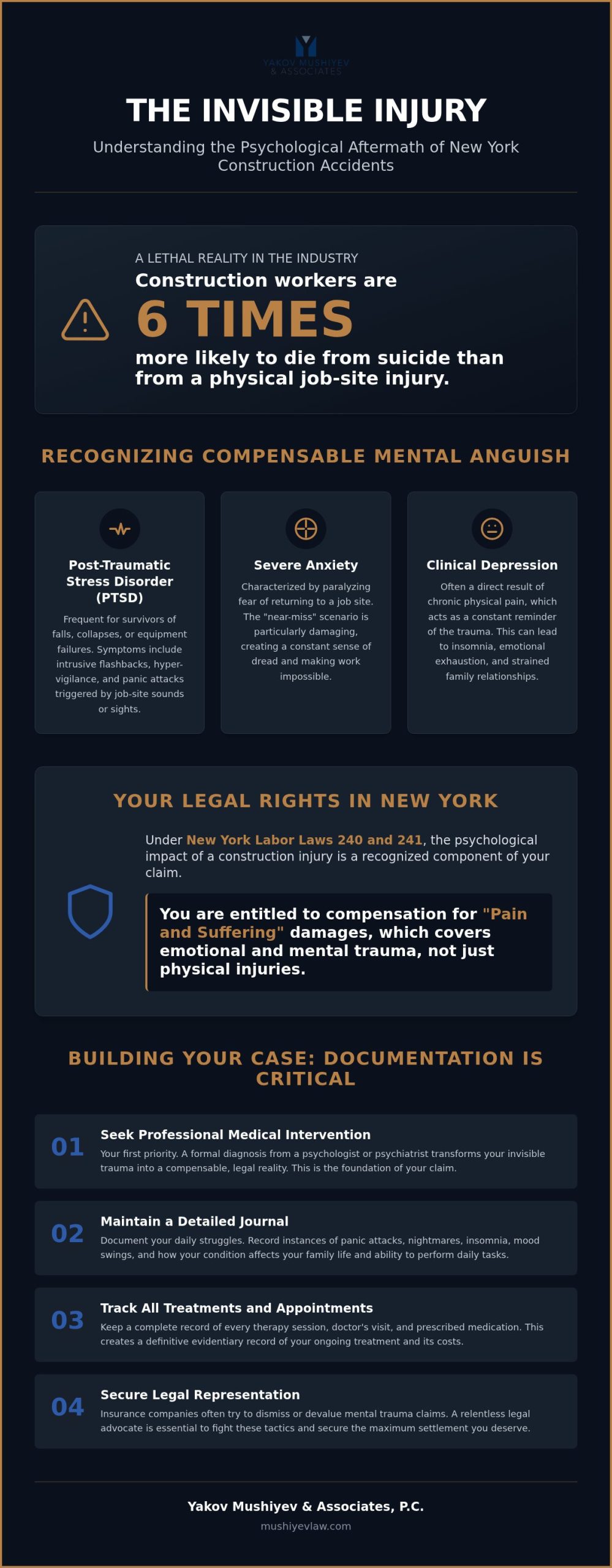
Construction workers are six times more likely to die from suicide than from job-site injuries, a statistic that highlights the lethal nature of untreated mental trauma in our industry. You may have walked away from a fall or a machinery accident, but the nightmares and the paralyzing fear of returning to a New York job site prove the incident is still happening in your mind. It’s exhausting to manage the irritability and depression that strain your family life while wondering if anyone recognizes the psychological impact of a construction site injury. We understand that your mental health is just as critical as your physical recovery, and we’re here to ensure the law recognizes it too.
This article provides a clear roadmap for recognizing and documenting emotional trauma while navigating the legal avenues available for your recovery. You’ll learn how to leverage the 2025 New York laws regarding work-related stress claims and hold negligent contractors accountable for their failures. We’ll guide you through the process of securing both the specialized medical help you need and the full financial compensation you deserve for every aspect of your suffering. Our goal is to move you from a state of uncertainty into a state of decisive action and justice.
Key Takeaways
- Recognize that clinical conditions like PTSD and severe anxiety are legitimate medical injuries that carry significant legal weight in New York courts.
- Learn how the psychological impact of a construction site injury entitles you to “Pain and Suffering” damages under New York Labor Laws 240 and 241.
- Master the essential steps for documenting your mental health treatment to create a definitive evidentiary record for your personal injury claim.
- Understand the necessity of professional medical intervention to transform your invisible trauma into a compensable legal reality.
- Discover why a relentless legal advocate is required to prevent insurance companies from dismissing your emotional trauma and to secure the maximum settlement.
Recognizing the Invisible Toll: The Psychological Impact of a Construction Site Injury
A construction accident is a violent disruption of your life that leaves marks far deeper than what an X-ray can capture. The psychological impact of a construction site injury is a medical and legal reality. It is not a sign of weakness or a temporary mood. In the high-pressure world of New York construction, a pervasive “tough guy” culture often discourages men and women from admitting they are struggling. This cultural pressure serves only the interests of negligent developers and insurance carriers who hope you’ll ignore your mental suffering until it’s too late to file a claim. We refuse to let that happen.
New York law recognizes “compensable mental anguish” as a legitimate category of damages. This means the legal system views your anxiety, depression, and fear with the same seriousness as a fractured vertebrae. If negligence led to your trauma, the responsible parties must be held accountable for the total scope of your injury, both seen and unseen. You don’t have to carry this weight alone while powerful entities try to dismiss your experience.
Why Construction Accidents Cause Unique Emotional Trauma
The nature of work in the five boroughs involves extreme heights, heavy loads, and complex machinery. When safety protocols fail, the resulting accidents are often catastrophic and sudden. Surviving a floor collapse or a crane failure often leaves a worker with Post-Traumatic Stress Disorder (PTSD), even if their physical wounds were minor. The “near-miss” scenario is particularly damaging; the haunting knowledge that you were seconds away from a fatal event can make returning to any job site feel impossible. This is compounded by the crushing stress of potentially losing a high-paying career and the ability to provide for your household.
The Link Between Physical Pain and Mental Health
Mental health does not exist in a vacuum. It’s often the direct byproduct of physical agony. Chronic pain from a spinal injury or a mangled limb serves as a relentless, 24-hour reminder of the trauma, which frequently spirals into clinical depression. This physical-mental connection creates a vicious cycle of insomnia, where pain prevents rest and the lack of sleep destroys your emotional resilience. We also recognize the toll this takes on the home. Secondary trauma is the specific psychological distress and emotional exhaustion experienced by the family members who care for an injured worker and witness their daily struggle for restoration.
Common Mental Health Conditions Following a Workplace Accident
The psychological impact of a construction site injury often manifests as severe, clinical conditions that require aggressive treatment and legal recognition. These are not just “moods” or temporary bouts of sadness. They are legitimate medical conditions that New York courts recognize as a core component of your damages. When you’re unable to step onto a job site without your heart racing, you aren’t just “nervous”; you’re experiencing a physiological response to trauma. We use these clinical diagnoses to build a wall of evidence that insurance companies cannot simply ignore.
Research regarding Recognizing the Invisible Toll demonstrates that the mental health trajectory for workplace injuries is often much worse than for other types of accidents. This makes your medical record the most powerful tool in your case. Without a formal diagnosis, your pain remains invisible to the court. With it, we can demand compensation for every therapy session and every day of lost wages. If you’re struggling to cope, it’s vital to speak with a NYC construction accident attorney who understands how to value these “invisible” injuries.
Post-Traumatic Stress Disorder (PTSD) on the Job Site
PTSD is a frequent reality for workers who have survived falls, collapses, or equipment failures. You might experience intrusive flashbacks where you’re reliving the exact second the scaffolding gave way. Hyper-vigilance becomes a constant state of being. The sound of a nail gun or the sight of a crane can act as a trigger, causing a physical panic attack. This isn’t just uncomfortable; it’s dangerous. A worker struggling with PTSD symptoms cannot safely operate heavy machinery or work at heights; this effectively ends their career until they receive proper care.
Anxiety, Depression, and Adjustment Disorders
The crushing weight of financial uncertainty often leads to clinical anxiety. When you’re the primary provider and you can’t work, the loss of purpose is devastating. This frequently leads to social withdrawal, where you pull away from your spouse and children. Adjustment disorder is another common diagnosis in New York litigation. It describes the intense struggle to accept a “new normal” after a permanent physical disability. These conditions are real, they are treatable, and they are compensable under the law. We don’t let negligent parties walk away from the emotional wreckage they’ve caused.
The Legal Weight of Mental Anguish in New York Construction Claims
New York Labor Laws 240 and 241 are among the most protective statutes in the nation, and they don’t limit your recovery to physical wounds alone. When safety protocols are ignored on a job site, the resulting trauma is a direct consequence of that negligence. In the eyes of the court, the psychological impact of a construction site injury is a valid component of a personal injury claim. We categorize these invisible injuries under the legal umbrella of “Pain and Suffering.” This isn’t just a vague term; it’s a powerful tool we use to demand compensation for the mental agony you endure every day. Understanding how these laws apply to your specific situation is a critical step in navigating the NY claim process effectively.
A major damage category we pursue is the “Loss of Enjoyment of Life.” This compensates you for the inability to participate in the activities, hobbies, and family interactions that once brought you fulfillment. If you can no longer coach your child’s team or enjoy a weekend out because of paralyzing anxiety, the law recognizes that as a profound loss. We don’t just ask for a settlement; we demand justice for the life you had before the accident occurred.
Economic vs. Non-Economic Damages
Economic damages are the tangible financial costs of your trauma. This includes bills for psychiatrists, psychologists, and specialized medications, as well as the loss of future earnings if your mental state prevents you from returning to the trade. Non-economic damages represent the actual human cost of living with fear. They cover the nightmares, the social withdrawal, and the persistent despair that follow a catastrophic event. New York juries often award significant amounts for non-economic suffering because they recognize that a broken spirit requires as much resources to heal as a broken body.
The Role of NY Labor Law 240 (The Scaffold Law)
NY Labor Law 240 provides strict liability for gravity-related accidents, such as falls from heights or being struck by falling objects. The sheer terror of a fall creates a unique trauma profile that is often more intense than other workplace incidents. Because the law holds owners and contractors responsible for these specific safety failures, the resulting psychological impact of a construction site injury is tied directly to their breach of duty. We aggressively leverage your rights under NY Labor Law to ensure that the “gravity” of your mental trauma is fully compensated. If they failed to protect you from the fall, they are responsible for the fear that remains long after you’ve hit the ground.
How to Document Psychological Trauma for Your Personal Injury Case
The psychological impact of a construction site injury is a significant legal claim, but it requires a foundation of irrefutable evidence to withstand the scrutiny of insurance adjusters. Documentation is the bridge between your silent suffering and the financial recovery you deserve. In New York litigation, an “invisible” injury only becomes visible to a jury when it is backed by a consistent, professional record. You must treat your mental health treatment with the same urgency as your physical surgeries. If you leave gaps in your care, the defense will argue that your trauma is either non-existent or unrelated to the accident.
We advise our clients to follow a strict documentation protocol to ensure no aspect of their suffering is overlooked. This includes:
- Obtaining a formal diagnosis from a licensed psychologist or psychiatrist.
- Maintaining a consistent schedule of therapy appointments.
- Keeping a detailed log of all prescribed medications for anxiety, depression, or sleep.
- Collecting statements from family members regarding changes in your behavior.
Do not make the mistake of downplaying your symptoms to your doctors. Honesty is your greatest asset. If you are struggling with suicidal thoughts or paralyzing fear, you must state this clearly so it becomes part of the permanent medical record. If you have questions about how to start this process, you should consult a NYC construction accident lawyer immediately to protect your rights.
Seek Immediate and Consistent Mental Health Care
Professional medical intervention is the most critical piece of legal proof in your case. A psychologist or psychiatrist acts as a clinical authority who can translate your experience into the technical terminology required by the court. We often utilize expert witnesses to explain the long-term effects of trauma to a jury, ensuring they understand that your brain has been physically altered by the accident. Your therapy notes serve as a real-time diary of your struggle, providing powerful evidence of the effort you are making to recover. Consistency is key; skipping sessions gives the opposition an opening to claim you are healed.
Maintain a “Daily Impact” Journal
Record how your mood affects your daily life and family interactions to provide a clear picture of your non-economic damages. This journal should be a raw, honest account of the challenges that don’t show up in a standard medical report. Document specific instances including:
- Flashbacks triggered by construction noises or sights.
- Panic attacks that prevent you from leaving the house.
- Nights spent awake due to recurring nightmares of the accident.
- Instances where your irritability or withdrawal caused strain with your spouse or children.
This personal record, combined with “before and after” testimony from friends, creates a compelling narrative of how your life has been diminished. It proves that the accident didn’t just break your body; it altered your ability to live.
Why a Relentless NYC Construction Accident Attorney is Essential
When you’re facing the psychological impact of a construction site injury, you aren’t just fighting a medical condition; you’re fighting a system designed to ignore your pain. Yakov Mushiyev & Associates, P.C. acts as your shield against powerful insurance carriers and negligent contractors who want to settle your case for pennies on the dollar. We don’t just look at your current medical bills. We calculate the true value of your psychological damages by examining how your trauma has dismantled your quality of life and your ability to provide for your family. Our firm operates on a contingency-based fee structure, which means you pay nothing unless we win. This “No Win, No Fee” promise is our commitment to reducing your financial anxiety so you can focus on healing your mind and body.
Calculating mental anguish requires more than just adding up receipts. It demands a deep understanding of New York’s specific legal landscape and the ability to project future needs. We consider the long-term costs of psychiatric care, specialized medications, and the lost earning capacity that results from being unable to return to a high-stress job site. You aren’t a file number to us; you’re a worker who was betrayed by a lack of safety protocols, and we’re here to ensure the compensation you receive reflects that reality.
Combating Insurance Tactics That Minimize Trauma
Insurance adjusters are trained to minimize the psychological impact of a construction site injury by labeling it as “pre-existing” or “exaggerated.” They’ll scour your past medical records to find any mention of stress from years ago to use against you. We take an aggressive approach to dismantle these tactics. By establishing a direct, undeniable link between the site accident and your current mental state, we force them to acknowledge the reality of your suffering. You should never sign a settlement release without accounting for your future therapy needs and long-term psychiatric care. If a contractor’s negligence broke your sense of safety, they must pay for the tools required to rebuild it.
Your Voice in the Courtroom
In the high-stakes environment of New York litigation, your experience can easily get buried under medical codes and legal filings. We ensure your human story is heard. Our team brings local expertise to every case we handle in Queens, Rosedale, and across the entire NYC area. We know the specific pressures of the New York construction industry, and we know how to present your trauma to a jury in a way that demands justice. Don’t let a negligent party define the value of your life. Contact Yakov Mushiyev & Associates, P.C. for a Free Consultation today to discuss your specific trauma in a risk-free environment. We are ready to fight for the restoration you deserve.
Take Control of Your Recovery and Your Future
Your mental health is not a side effect of your accident; it is a core injury that demands professional treatment and legal recognition. We have established that the psychological impact of a construction site injury is a valid damage category under New York Labor Laws 240 and 241, provided you maintain a consistent medical record. Yakov Mushiyev & Associates, P.C. stands as a fierce advocate for workers in Queens and across NYC, utilizing over 20 years of litigation experience to challenge insurance carriers that try to dismiss your trauma.
We understand the invisible toll and fight for the maximum settlement to cover your future therapy and lost earning capacity. Our firm operates on a contingency-based structure, meaning there are zero upfront costs and we only get paid if we win your case. You have already survived the accident; now it’s time to secure the justice required for your full restoration. Get the Justice You Deserve: Schedule Your Free Case Evaluation Now. You are more than your injuries, and we are ready to fight for the life you deserve.
Frequently Asked Questions
Can I sue for PTSD after a construction accident in New York?
Yes, you can sue for Post-Traumatic Stress Disorder as part of a personal injury lawsuit if the accident resulted from negligence or a violation of New York Labor Law. This trauma is categorized as non-economic damage under the legal umbrella of pain and suffering. We aggressively pursue these claims to ensure the psychological impact of a construction site injury is fully compensated, holding developers and contractors accountable for your mental agony.
How do you prove a psychological injury if there are no physical scars?
You prove a psychological injury through a combination of clinical documentation and expert testimony. While physical scars are visible to the eye, your medical records from psychologists and psychiatrists provide the necessary technical evidence for the court. We also utilize daily impact journals and statements from family members to demonstrate how the accident fundamentally altered your personality, sleep patterns, and overall quality of life.
Will my workers’ compensation claim cover therapy or counseling?
Yes, New York Workers’ Compensation covers authorized mental health services. As of January 1, 2025, the law permits claims for mental injury based on extraordinary work-related stress. Additionally, 2026 legislative expansions increased the list of authorized providers to include more licensed mental health practitioners. This ensures that you have access to the professional care required to treat the invisible wounds sustained on the job site.
What is the average settlement for mental anguish in a NYC construction case?
Settlement values for mental anguish depend on the severity of the trauma and its long-term impact on your ability to work. There is no fixed average because every worker’s experience is unique. We calculate the true value by analyzing your ongoing therapy costs, future lost earning capacity, and the profound loss of enjoyment of life caused by the accident. We refuse to settle for anything less than what is just.
Can I be fired for seeking mental health help after a work injury?
No, it is illegal for an employer to fire or retaliate against you for seeking mental health treatment or filing a claim. Both New York State Labor Law and federal protections shield workers from such discriminatory actions. If you face retaliation, it becomes a separate legal matter that we can address as part of your overall advocacy. We serve as your shield against any employer who attempts to punish your vulnerability.
How long do I have to file a claim for psychological trauma in NY?
In New York, you generally have three years from the date of the accident to file a personal injury lawsuit for psychological trauma. However, if a government entity is involved, you must file a Notice of Claim within 90 days and a lawsuit within one year and 90 days. For workers’ compensation, you must notify your employer within 30 days of the incident. Time is of the essence in these matters.
What if I had anxiety before the accident, but it got much worse?
You are still entitled to compensation if a pre-existing condition was aggravated by the accident. Under the Eggshell Plaintiff rule, a negligent party is responsible for the full extent of the harm they caused, even if you had a prior vulnerability. We focus on proving the direct link between the site accident and the significant worsening of your symptoms. Your past health does not excuse a contractor’s current negligence.
Do I have to go to court to get compensated for my emotional distress?
Most cases settle before reaching a jury, so you may not have to step into a courtroom. However, we prepare every file as if it is going to trial. This aggressive stance provides the leverage needed to force insurance companies into a fair settlement that acknowledges the full psychological impact of a construction site injury. We remain a steady, calm, and approachable guide through every step of this complex legal journey.

